
This briefing is prepared by the Hive Research Institute in partnership with Hive Financial Assets. It is built from public data: the Bureau of Economic Analysis, the Bureau of Labor Statistics, the Federal Reserve, the University of Michigan, and published market reporting. It is education, not advice, and it does not offer or describe any investment. I write it because the people I teach and the executives I sit with keep asking the same three questions. Is the economy as good as the number says? Is the consumer as weak as the mood says? And is AI about to take the jobs? Here is what the data says this fall.
1. Growth Is Strong, and Investment Is Doing the Work
U.S. Real GDP Growth by Contribution
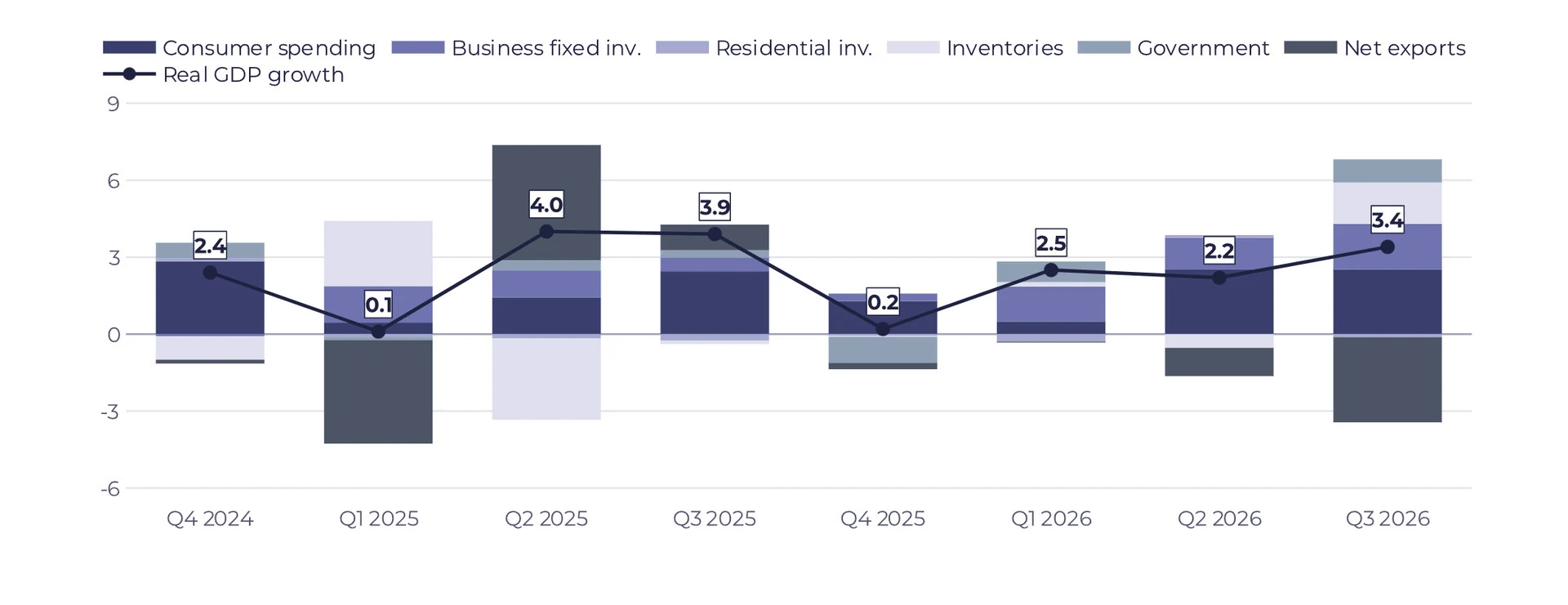
Real GDP grew at a 3.4% annual rate in the third quarter of 2026, up from 2.2% in the second. That is a strong number by any recent standard, and it arrived in a year of war-driven energy prices and rising interest rates. Investment explains much of it. Goldman Sachs estimates that the five largest U.S. cloud companies will spend roughly $800 billion on AI infrastructure this year and $1.2 trillion next year, which its strategists describe as a larger share of GDP than any technology build-out since the railroads.
U.S. Dollar Index (DXY)
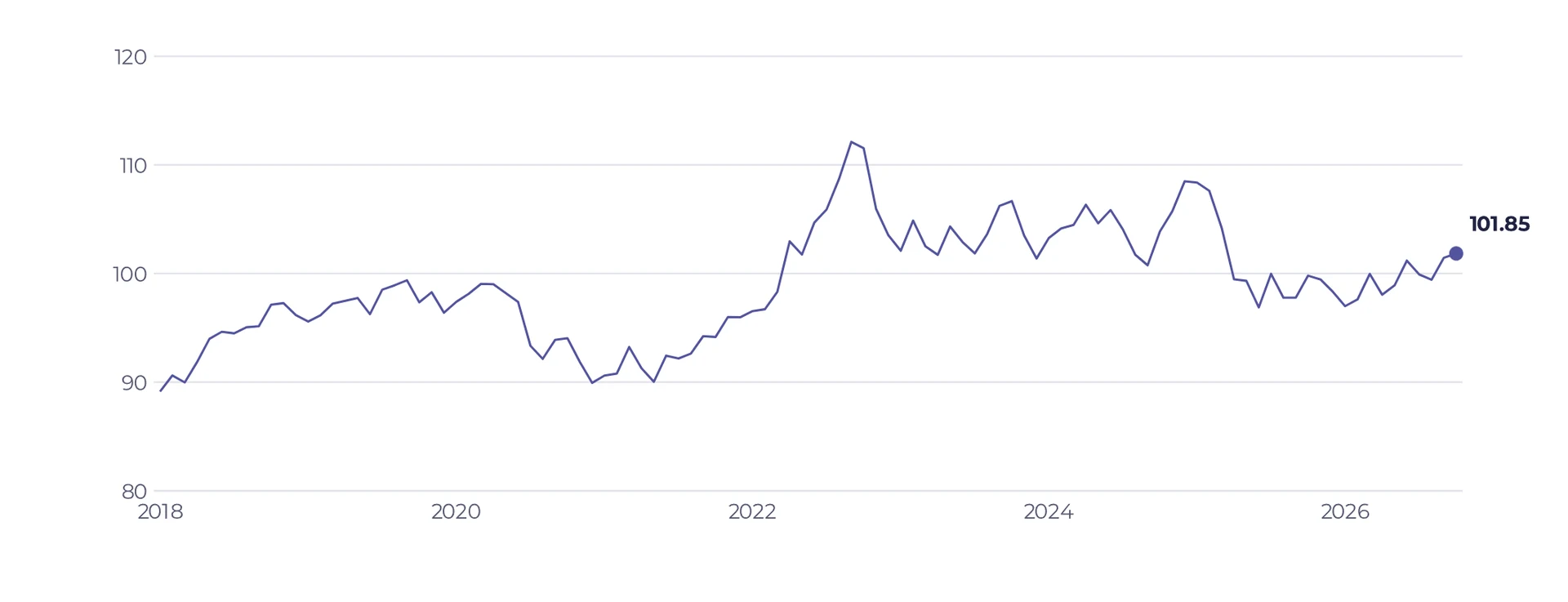
The dollar index closed at 101.85 in early October, firmer than it was over the summer. A stronger dollar makes imports and travel cheaper for Americans and makes life harder for U.S. exporters. It is also a vote: when the world is uncertain, capital still comes here.
2. The Fed Raised Rates, and the Bond Market Was Already There
Treasury Yields and the Federal Funds Rate
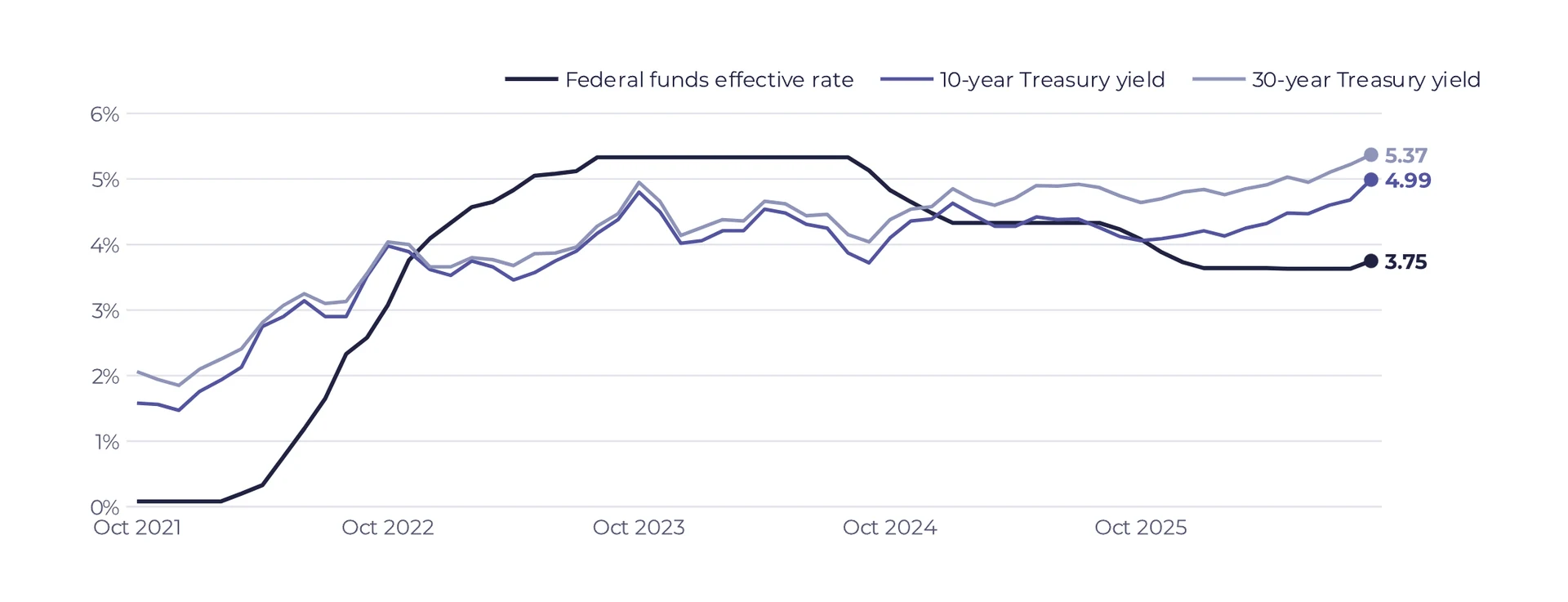
On September 16 the Federal Reserve raised its target range to 3.75% to 4.00%, its first increase since 2023, and held there on October 28 with two members voting for another increase. Long-term rates had already made the move. In September the 10-year Treasury averaged 4.99% and the 30-year averaged 5.37%. The practical point for a household or a business owner: mortgages, car loans, credit cards, and lines of credit are priced off the long end, and the long end is not waiting for the Fed.
Gasoline Futures (RBOB)
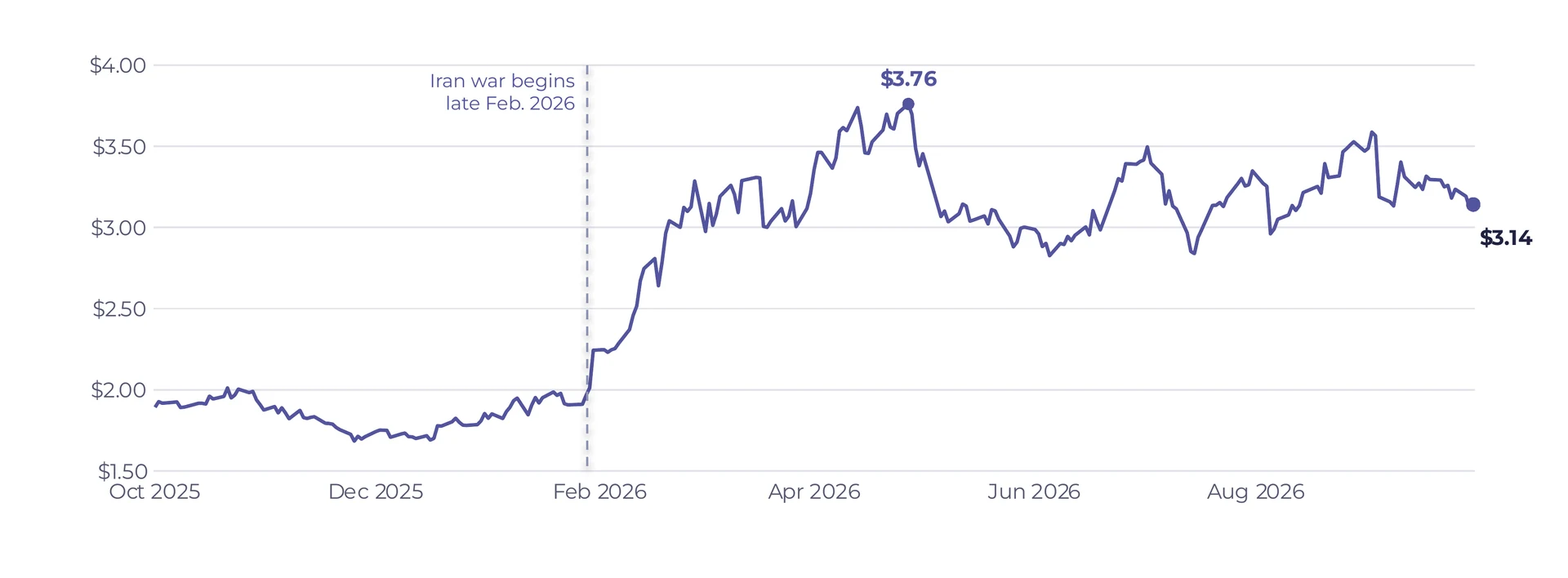
Energy is why. Wholesale gasoline roughly doubled after the conflict with Iran began in late February, peaking at $3.76 per gallon and settling near $3.14 in late October. Consumer prices rose 3.7% in the twelve months through September, with gasoline up 34.2%. Adjusted for inflation, gasoline is still below its 2008 level. That fact rarely makes the evening news, and it matters for how long this shock can last before it changes behavior.
3. Jobs: More Openings Than Job Seekers, and a Thin Cushion on Wages
U.S. Job Openings and Unemployed People
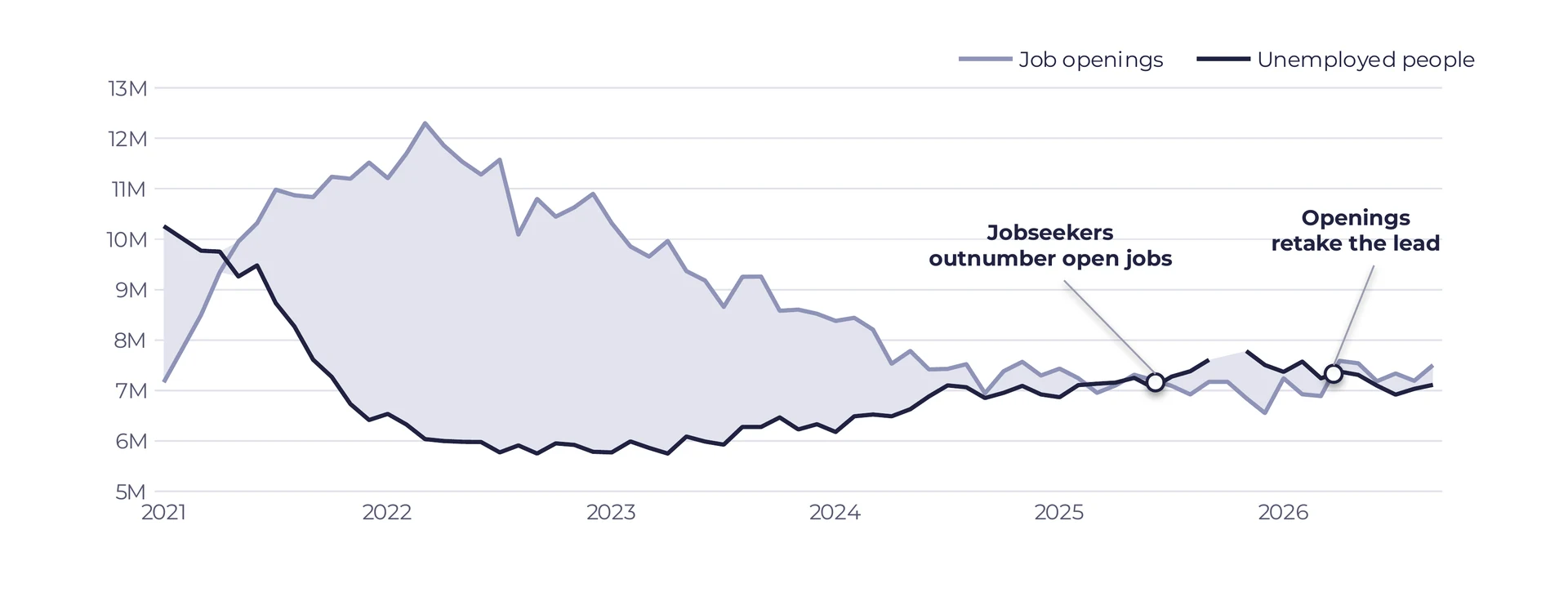
There were about 7.5 million job openings in September against 7.11 million unemployed people, or 1.06 openings for each person looking. The unemployment rate was 4.2% in September and 4.1% in October. Hiring is slow and layoffs are low. Economists call it a low-hire, low-fire labor market, and it is a stable one.
Wage Growth and Inflation
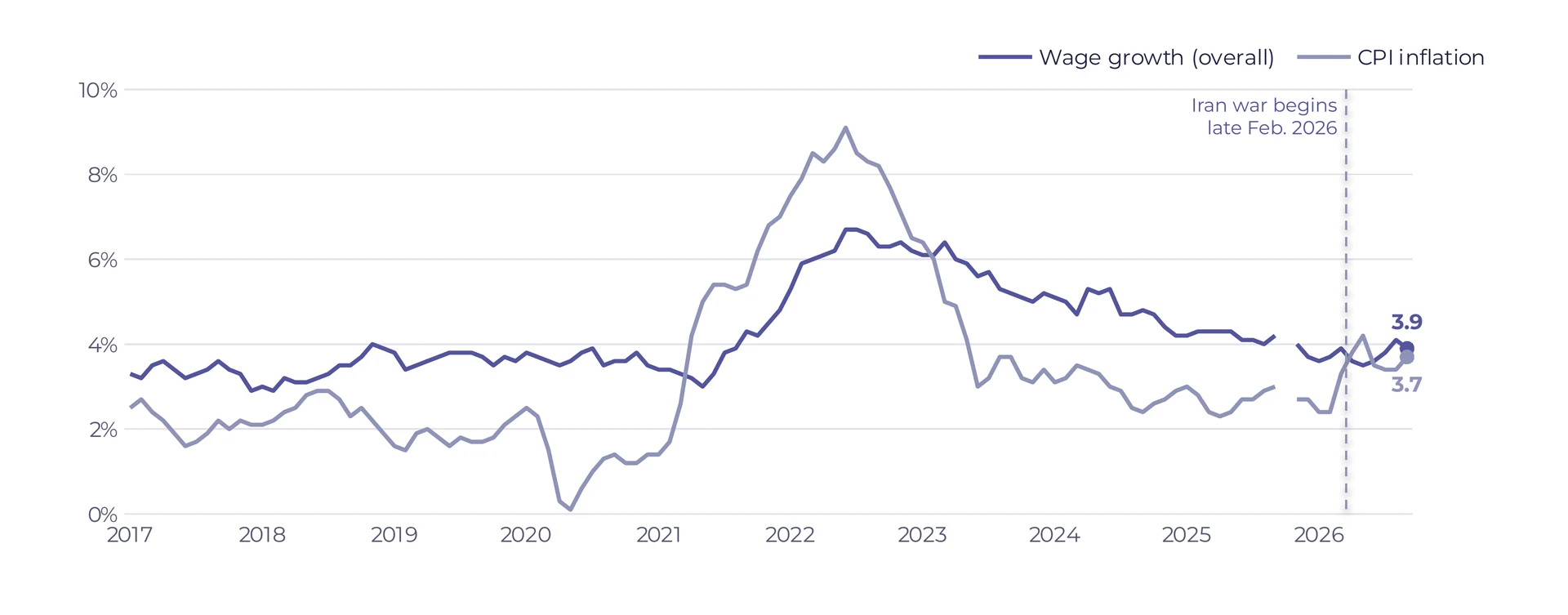
Wages are growing 3.9% a year on the Atlanta Fed's measure, against 3.7% inflation. Paychecks are ahead of prices by two tenths of a point. That is the right direction and a very thin margin. One more energy spike would erase it.
4. The Household Balance Sheet Is Better Than the Mood
U.S. Household Debt to GDP
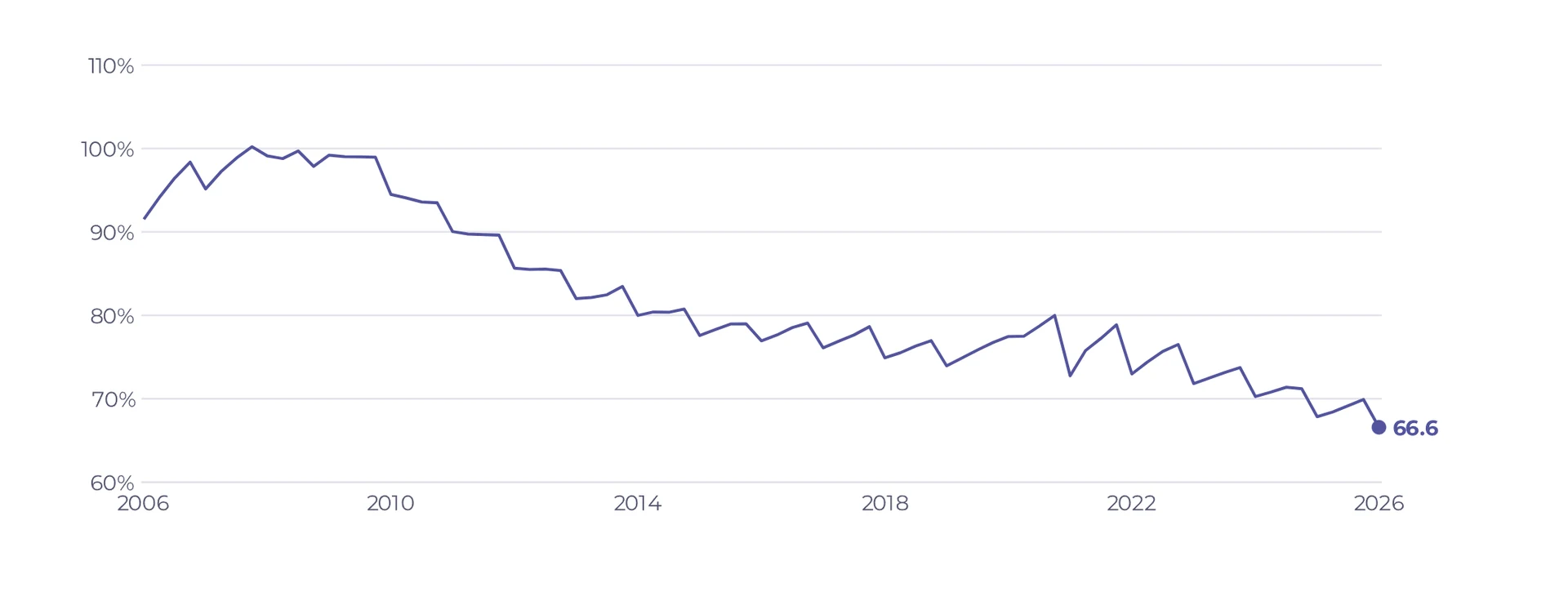
Household debt equals 66.6% of GDP, down from roughly 100% before the 2008 crisis.
Household Liabilities as a Share of Net Worth
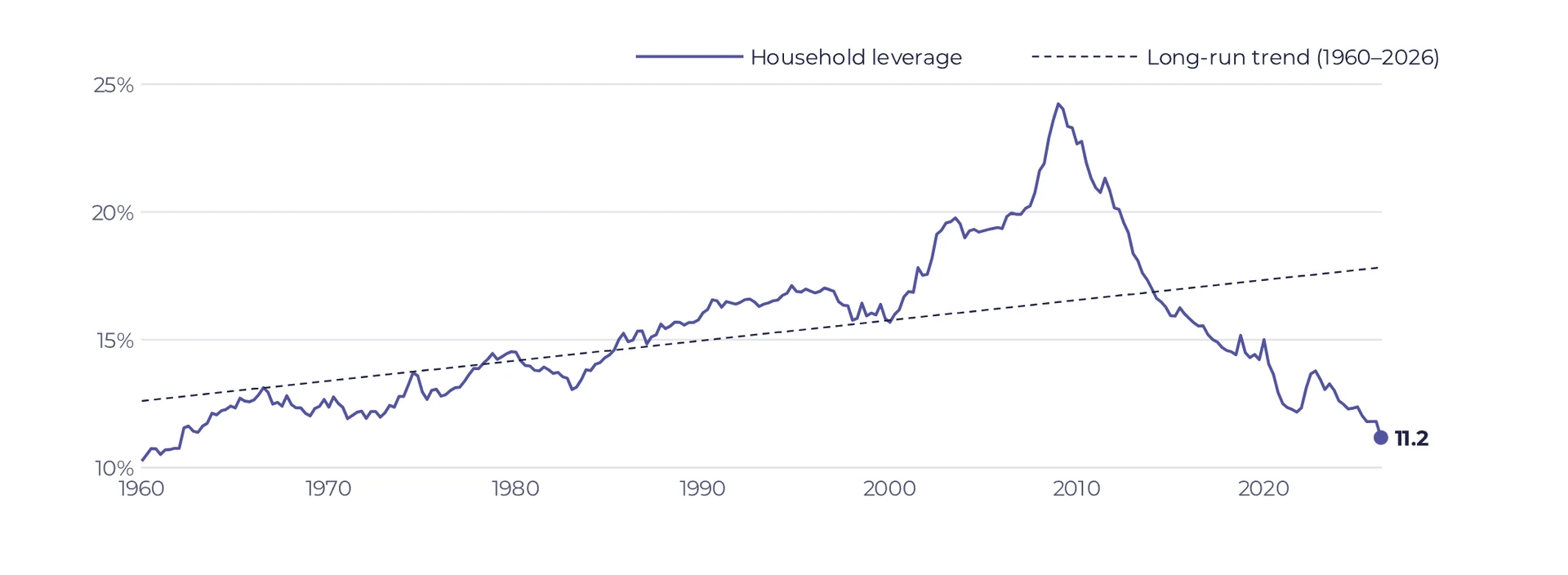
Household liabilities are 11.2% of household net worth, lower than at any point on a chart that begins in 1960. In aggregate, American families enter this period owing less, relative to what they earn and own, than at any time in most of our lifetimes. Whatever comes next, it will not look like 2008.
Consumer Credit Delinquency by Loan Type
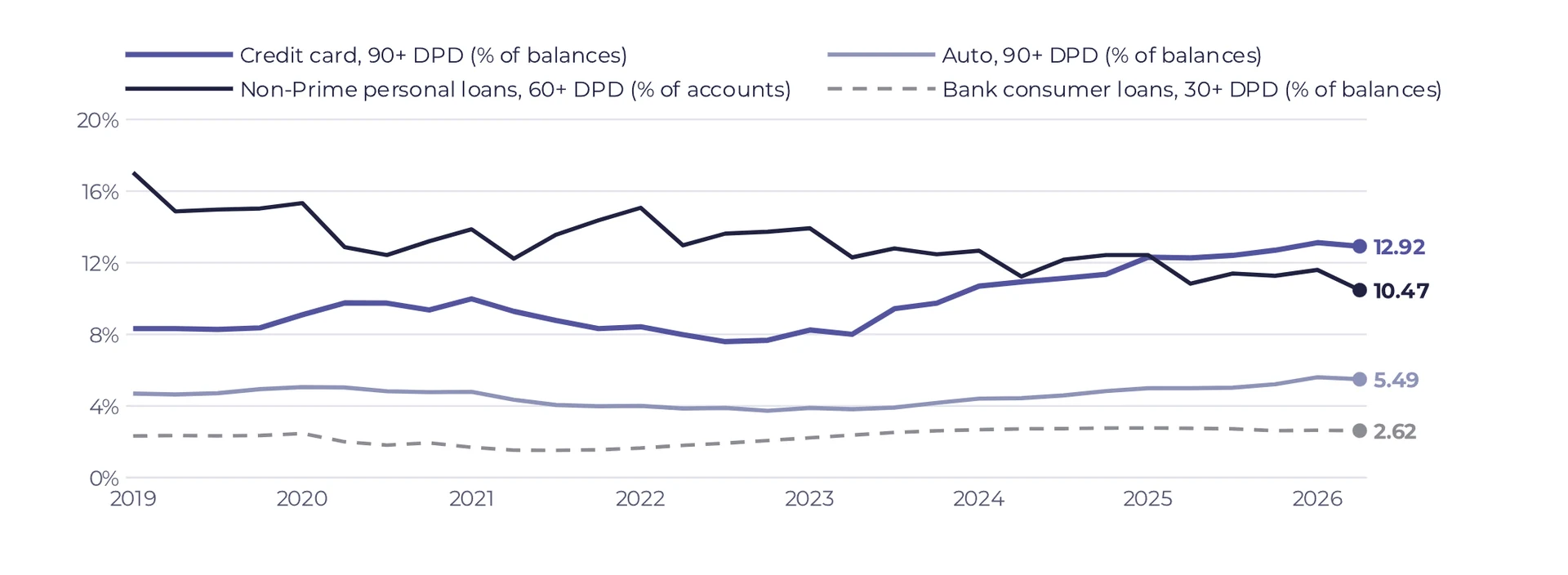
The aggregate hides where the stress is. Seriously delinquent credit card balances stand at 12.92% and auto at 5.49%, both worse than before the pandemic. Short-term non-prime installment loans have moved the other way, with 60-day delinquency trending down since 2019. Lenders who loosened standards in 2021 are paying for it now. Lenders who see a problem in weeks, and can adjust in the next month's loans, are not.
University of Michigan Consumer Sentiment
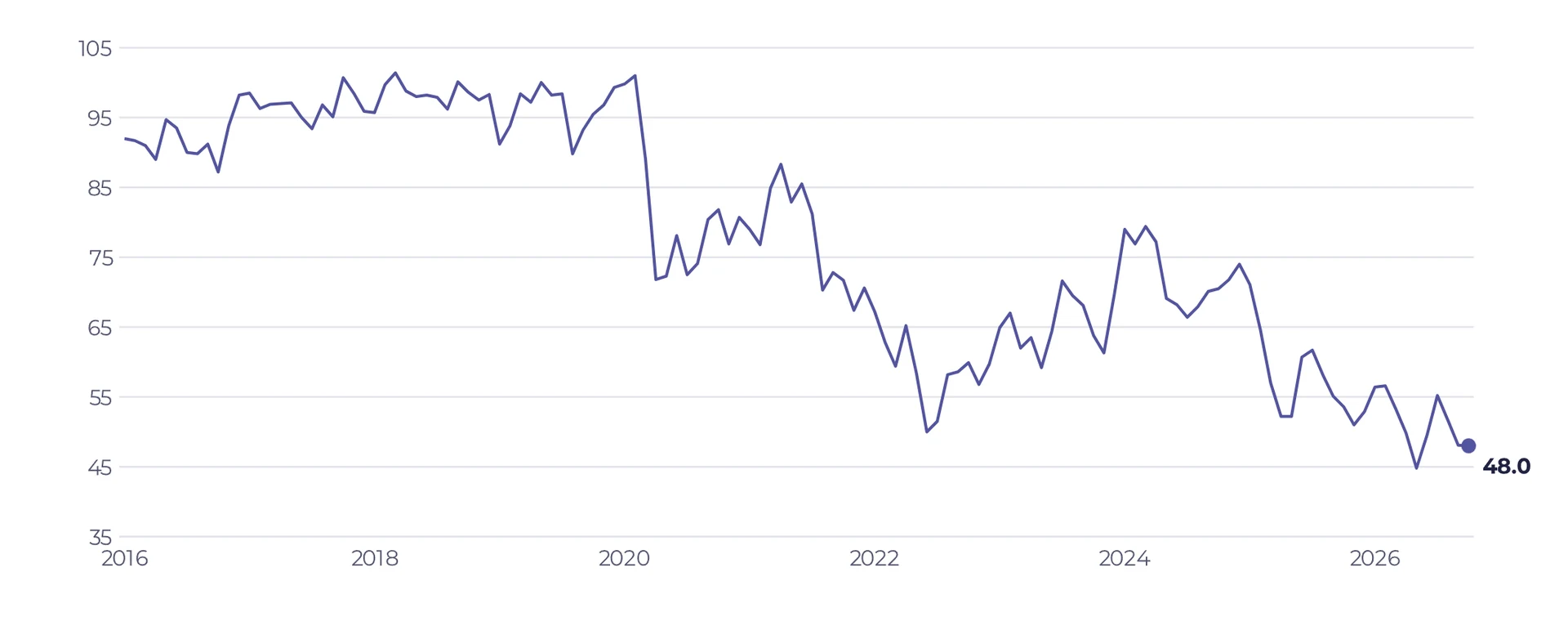
And yet consumer sentiment finished October at 48.0, the second-lowest reading in the history of the survey. People feel worse than their balance sheets look. Some of that is recency bias: everyone remembers what gas and groceries cost three years ago. Some of it is real. Averages are held up by asset owners and high earners, while a wage earner absorbs prices they cannot offset. Both things are true, and a leader who reads only the headline or only the mood will get it wrong.
5. Private Credit: A Lesson in Duration
Investors asked to withdraw about $4.3 billion, roughly 10% of shares, from the largest non-traded private credit fund in the third quarter, and for the second quarter in a row the fund paid out only up to its standard 5% limit. Other large managers reported that requests were easing but still well above what their funds could pay in a quarter. The loans inside these funds are not, in aggregate, bad. The lesson is about structure. A fund that offers quarterly liquidity against loans that take five to seven years to repay has a mismatch that stays invisible until many investors ask for their money at once. For any investment, in any asset class, the question worth asking is simple: how long does it take the underlying asset to turn back into cash, and does that match what I have been promised?
6. The AI Factory and the Jevons Paradox
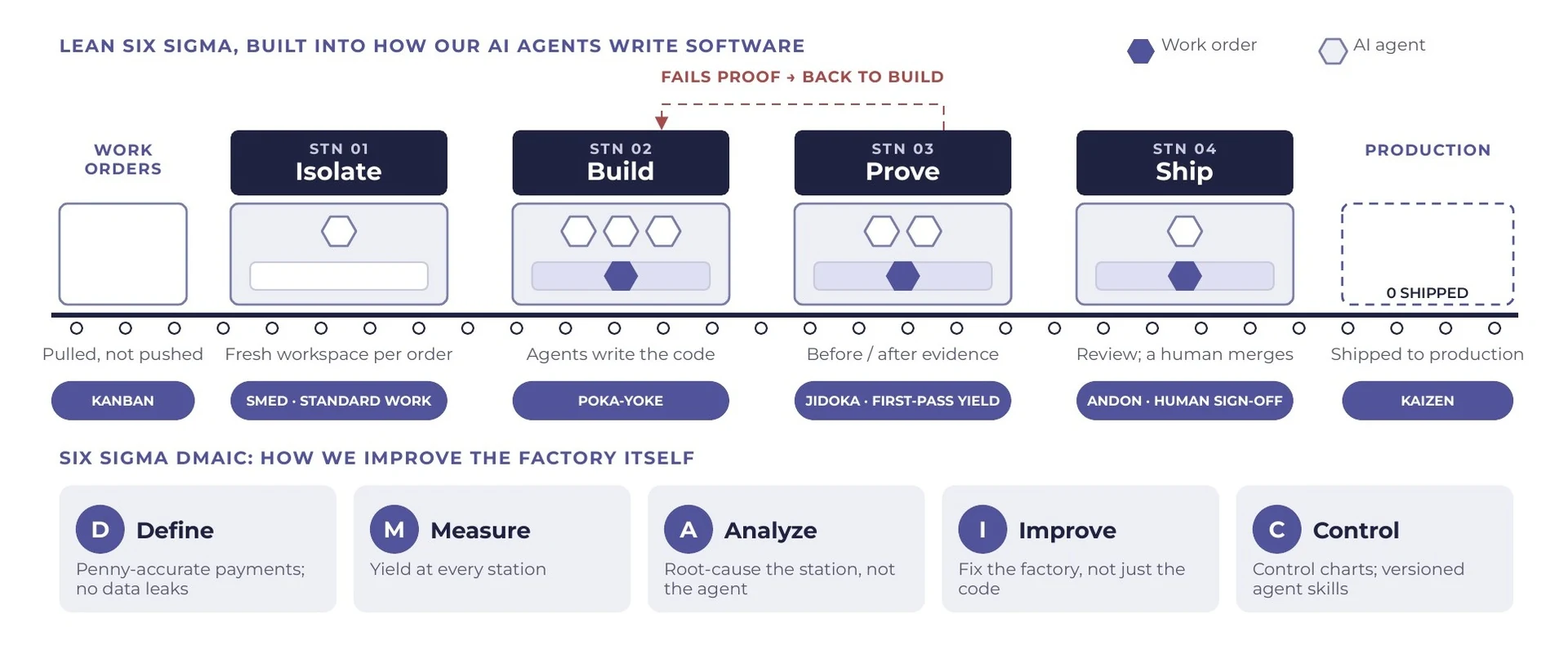
The Software Factory: Lean Six Sigma Applied to AI Agents
The question I am asked most is whether AI will take the jobs. In 1865 the economist William Stanley Jevons noticed that as steam engines became more efficient with coal, Britain burned more coal, not less, because cheaper energy found thousands of new uses. Economists call it the Jevons paradox, and the same thing is happening to software. When the cost of building falls by a factor of ten, organizations do not build the same amount with a tenth of the people. They build things they could not justify before. When one person can produce five or ten times what they could two years ago, the rational response is to want more of those people, not fewer.
Here is a real example, with real numbers. This fall a financial technology team we work with rebuilt its loan origination system, the core software that takes an application from first click to funded loan, using AI agents organized like a factory floor.
- 7 weeksFrom empty repository to first live production use, against about 18 months the traditional way
- 71%Share of the 92,400 agent-written lines that are automated tests
- ~18Defects found in human testing, each traced to its root cause in under two hours
That is roughly 11 times faster to first release. The team projects the complete replatform at about twelve weeks against twenty-four months, roughly 9 times faster; that second figure is a projection until it ships. New infrastructure that used to take weeks now stands up in four to five days.
Consider the return. The traditional plan was a team of about eight developers for eighteen months, or roughly 144 developer-months, before the system produced any value. The factory delivered the same first release with the same people in under two months. The system begins earning its keep about sixteen months sooner, and the team is free to start the next project a year and a half early. The return is not a smaller payroll. It is time.
The method matters more than the tools, because the tools are available to anyone. Manufacturing solved quality at scale decades ago, and the factory borrows its vocabulary directly:
- Pull, do not push (kanban). Work enters only as fast as it can be finished and proven.
- A clean bench for each job (standard work). Each order gets a fresh, isolated workspace in minutes.
- Mistake-proofing (poka-yoke). Guardrails make whole classes of errors hard to commit.
- Proof before progress (jidoka). Nothing advances without before-and-after evidence, and failures route back automatically.
- Anyone can stop the line (andon). A person reviews and approves each change before it ships.
- Fix the factory, not just the product (kaizen). When something breaks, the team root-causes the station, not the agent.
Lean and Six Sigma earned a mixed reputation because, applied to people, they can treat a human being like a cog. Applied to software agents, which have no ego and no fatigue, they work remarkably well. The hard part is not the model. It is the organizational discipline: who writes the requirements, who is accountable for proof, and who has the authority to stop the line. I expect most large companies will need two to three years to reorganize around this. The ones that start now will have a lead that is difficult to close.
What to Watch Next Quarter
- Energy and the next inflation prints. A second spike would put prices back ahead of paychecks.
- The long end of the Treasury curve. Borrowing costs for households and businesses follow it, not the Fed.
- AI capital spending. It is carrying a meaningful share of growth, and it is increasingly financed with debt.
- Credit card and auto delinquencies. These show where 2021's lending decisions are still being paid for.
- Who reorganizes for AI and who only buys licenses. The gap between those two groups is where the productivity story will be decided.
References and Sources
Public sources for the data in this briefing, accessed November 11, 2026.
- U.S. Bureau of Economic Analysis. Gross Domestic Product (Advance Estimate), 3rd Quarter 2026, released October 29, 2026.
- Bloomberg. Goldman Sachs forecast of AI infrastructure spending by the five largest U.S. hyperscalers, September 25, 2026.
- Trading Economics. U.S. Dollar Index and RBOB gasoline futures.
- Board of Governors of the Federal Reserve System. FOMC statements, September 16 and October 28, 2026.
- Board of Governors of the Federal Reserve System. H.15 Selected Interest Rates.
- U.S. Bureau of Labor Statistics. Consumer Price Index, September 2026, released October 14, 2026.
- U.S. Bureau of Labor Statistics. Job Openings and Labor Turnover Summary, September 2026, released November 3, 2026.
- U.S. Bureau of Labor Statistics. The Employment Situation, September and October 2026.
- Reuters. "US job openings rise in September as layoffs hit lowest level in 1-1/2 years," November 3, 2026.
- Federal Reserve Bank of Atlanta. Wage Growth Tracker, September 2026.
- International Monetary Fund via FRED. Household Debt to GDP for the United States.
- Board of Governors of the Federal Reserve System. Financial Accounts of the United States (Z.1).
- Federal Reserve Bank of New York. Quarterly Report on Household Debt and Credit, Q2 2026.
- 2nd Order Solutions. Credit Risk Review, Q2 2026.
- University of Michigan. Surveys of Consumers, October 2026 final.
- Bloomberg News. "Blackstone private credit fund maintains 5% cap as redemption requests remain elevated," September 3, 2026.
- Jevons, William Stanley. The Coal Question. London: Macmillan, 1865.
- Ohno, Taiichi. Toyota Production System: Beyond Large-Scale Production. Productivity Press, 1988.
- Hive Research Institute. The Hive Software Factory (class, October 27, 2026).
About This Briefing
The Hive Research Institute (HRI) is a research and education organization. It publishes classes, speaker conversations, and research on artificial intelligence, economics, and leadership at hiveresearch.com, including its AI work at HiveResearch.com/AI. This briefing is prepared in partnership with Hive Financial Assets.
This material is provided for educational purposes only. It is not investment, legal, tax, or accounting advice, and it is not an offer to sell or a solicitation of an offer to buy any security, fund interest, or other financial product. It does not describe the terms or performance of any investment. Economic and market data are drawn from the public sources cited and are believed to be reliable but have not been independently verified. Views expressed are those of the author as of the date shown and may change without notice. Forward-looking statements, including projections identified as such, involve uncertainty, and actual outcomes may differ.